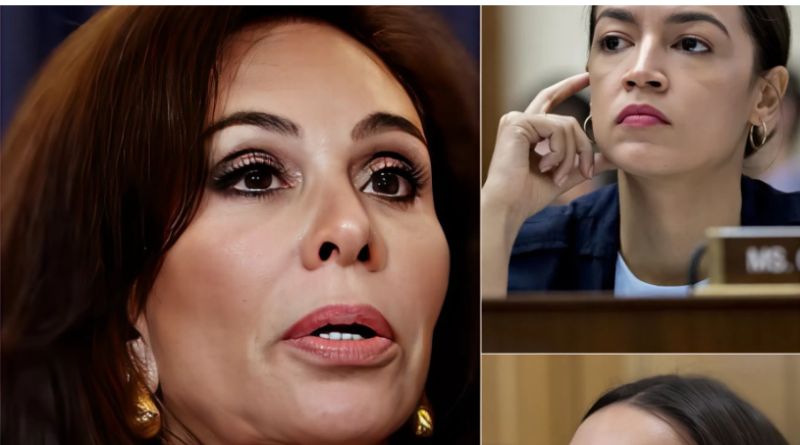
The Midnight Vigil: Jeanine Pirro’s 3 A. M. Stand Against Political Intimidation and the Shadow of Power
The city of New York was draped in the heavy, expectant silence of the pre-dawn hours when a notification pulsed across thousands of screens, shattering the quiet of the night.
It was 3:07 a. m.
, a time usually reserved for late-night reruns or deep sleep, but for Jeanine Pirro, it was the moment to draw a line in the sand.
Without the polished sheen of a television studio, without the bombastic intro music that usually accompanies her segments, and without the safety net of network approval, she appeared.
Dressed in a simple dark blazer, her reading glasses cast aside as if to remove any barrier between herself and the lens, Pirro didn’t look like a media personality; she looked like a witness.
The usual fiery energy that defines her public persona was replaced by a rare, steady gravity—a calmness that was far more unnerving than any shout.
She wasn’t there to discuss ratings or headlines; she was there to report a threat that struck at the very heart of her professional existence.

The raw, unvarnished nature of Jeanine Pirro’s 3 A. M.
broadcast signaled a radical departure from traditional media narratives and highlighted a moment of genuine personal urgency.
By choosing to go live in the middle of the night, Pirro bypassed the gatekeepers and the sanitizing filters of corporate media, speaking directly to her audience in a way that felt dangerously authentic.
The absence of flashing lights and applause created a vacuum that was filled only by her voice, making the stakes feel immediate and visceral.
This was not a calculated PR move or a scripted segment; it was a digital emergency exit.
In an age where every public appearance is focus-grouped and edited, the sight of a prominent figure standing in her own home, holding her own phone, and speaking with quiet vulnerability, sent a clear message that the situation had escalated beyond the reach of standard protocols.
The chilling directness of the electronic message sent to Pirro underscores a growing culture of intimidation aimed at silencing prominent voices who dare to challenge established political powers.
When she read the words aloud—”Keep digging into matters that don’t concern you, Jeanine, and don’t assume your platform will shield you”—the room seemed to grow colder.
The message, originating from a verified account linked to a high-ranking political figure, was a textbook example of modern suppression.
It wasn’t a critique of her work or a disagreement on policy; it was a warning that her safety and her career were conditional upon her silence.
By making this private threat public, Pirro stripped the powerful of their greatest weapon: the shadows.
She transformed a secret attempt at coercion into a public record, forcing the audience to confront the reality that accountability is often met with the threat of professional and personal erasure.

Pirro’s revelation exposes the invisible pressures within the media industry where journalists are often subtly coerced into following sanctioned narratives rather than pursuing inconvenient truths.
Throughout the broadcast, she spoke about the subtle expectation that public figures should provide commentary rather than demand accountability.
She acknowledged the existence of “lanes”—pre-defined boundaries of discourse that journalists are encouraged to stay within to ensure their longevity.
This pressure rarely arrives as a shout; it comes as a polite suggestion, a professional warning, or a carefully worded email about the “direction” of a show.
Pirro’s defiance highlights the internal conflict faced by those who see the “deeper truths” but are told that asking the wrong questions can cost them their careers.
Her broadcast served as a whistleblowing event against the systemic culture of complicity that often exists behind the scenes of major news organizations.
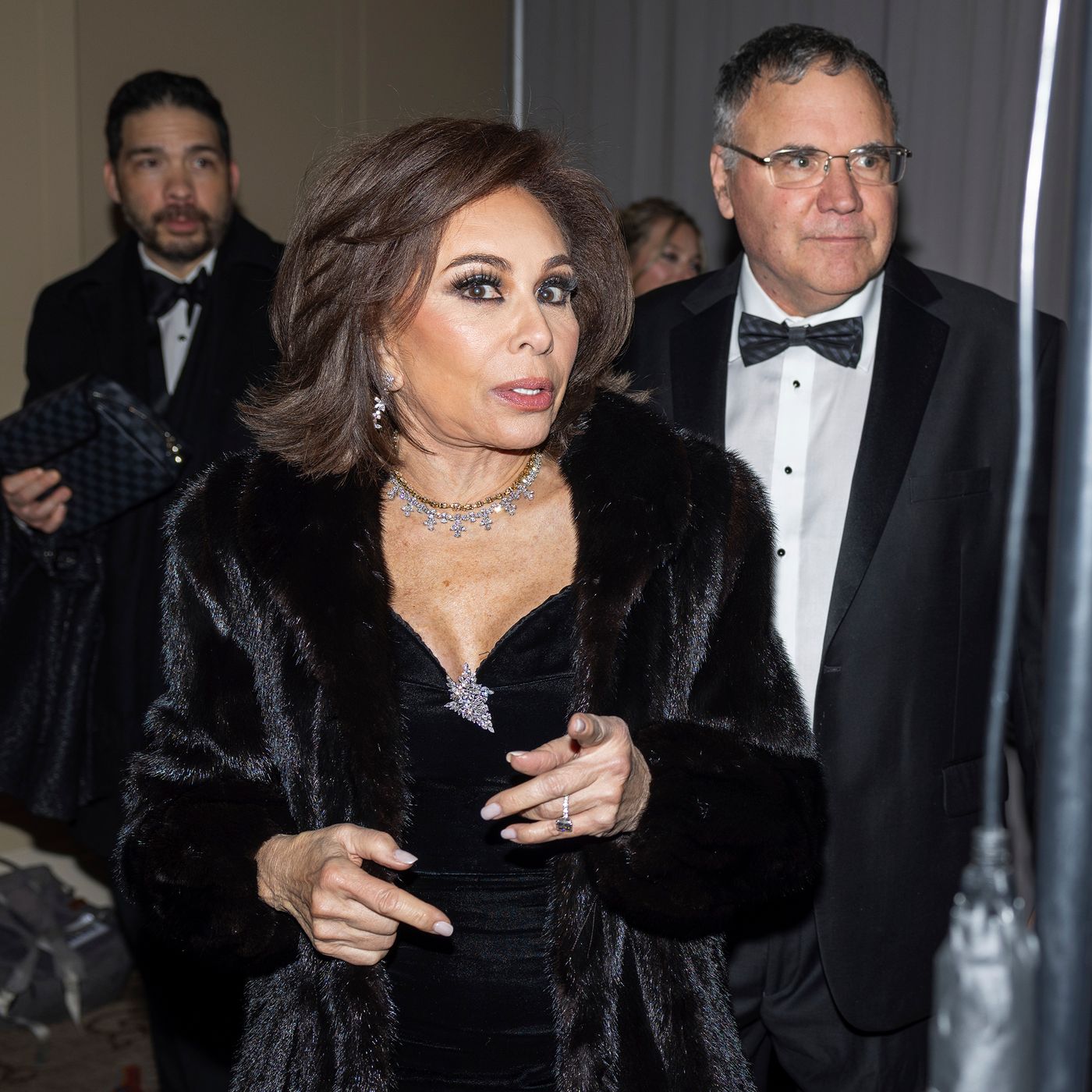
By framing her defiance as a legal and moral duty, Pirro leveraged her background in the judiciary to transform a personal threat into a broader defense of the rule of law.
As a former judge and prosecutor, she didn’t just speak as a commentator; she spoke as an officer of the court.
She emphasized that responsibility is not a slogan but a duty to the law—a duty that becomes more critical when the pressure to stay silent is at its peak.
She argued that silence in the face of intimidation is a form of complicity, a surrender of the very principles that the legal system and the free press are meant to uphold.
This wasn’t just Jeanine Pirro the host defending her show; it was Jeanine Pirro the jurist defending the concept of justice itself.
By grounding her stance in the law, she elevated the conversation from a partisan squabble to a fundamental question of democratic integrity.
The deliberate use of silence and the lingering image of an empty, vibrating phone served as a haunting metaphor for the persistent nature of modern surveillance and political pressure.
Throughout the stream, the phone in her hand—and later on her desk—became a character in its own right.
As it vibrated with incoming notifications, the audience was reminded that the “powerful political figure” was likely watching, still attempting to intrude upon her space even as she spoke.
When Pirro finally placed the phone face-down and stepped out of frame, leaving the camera live on an empty chair, the effect was profound.
The chair sat empty, a symbol of a voice that could be removed, while the phone continued to buzz—a persistent, mechanical reminder that the forces of intimidation do not stop just because the camera is turned off.
It was a masterclass in visual storytelling that captured the claustrophobia of being targeted by those in power.
Standing at the precipice of a potentially career-ending confrontation, Pirro’s broadcast serves as a rare example of a media figure prioritizing the integrity of their message over the security of their platform.
She was remarkably candid about the potential consequences, stating that if anything were to happen to her show or her presence, the public would now know exactly where the pressure came from.
This kind of “scorched earth” transparency is rare in a world where media contracts and corporate alliances usually dictate behavior.
By saying “See you tomorrow. Or don’t. That part isn’t up to me,” she surrendered her ego to the truth.
She acknowledged that her influence was finite, but the truth she was protecting was not.
This willingness to lose everything for the sake of a single, uncompromised message is what transformed the broadcast from a news update into a manifesto of resistance.
The ripple effect of this late-night broadcast is likely to spark a national conversation about the safety of journalists and the lengths to which powerful figures will go to maintain their influence.
As the sun rose over New York, the livestream clips began to circulate, breaking the internet and forcing a response from both fans and critics.
Half the country saw a hero standing up to tyranny; the other half saw a provocation.
Regardless of the interpretation, the fact remains that a line has been drawn. Pirro’s 3 a. m.
message has effectively dismantled the modern political playbook, which relies on the assumption that even the loudest voices can be quieted with the right amount of pressure.
By standing in the light and refusing to back down, she has reminded the public that the pursuit of justice is only truly valuable when it becomes “inconvenient” for the powerful.
Ultimately, the image of the empty chair and the vibrating phone remains a chilling testament to the high cost of accountability in the modern era.
Jeanine Pirro’s midnight vigil was a moment of pure, unfiltered human connection, a daughter of the law refusing to be intimidated by the sons of power.
Whether she returns to her desk tomorrow or is silenced by the very forces she called out, her message has already achieved its goal.
She has shown the world that the most dangerous thing to a corrupt system is a person who is no longer afraid to lose their platform.
In the quiet hours of the night, Jeanine Pirro didn’t just go live; she went into the history books as a voice that refused to be muted, standing firmly in the law, in the truth, and most importantly, in the light.
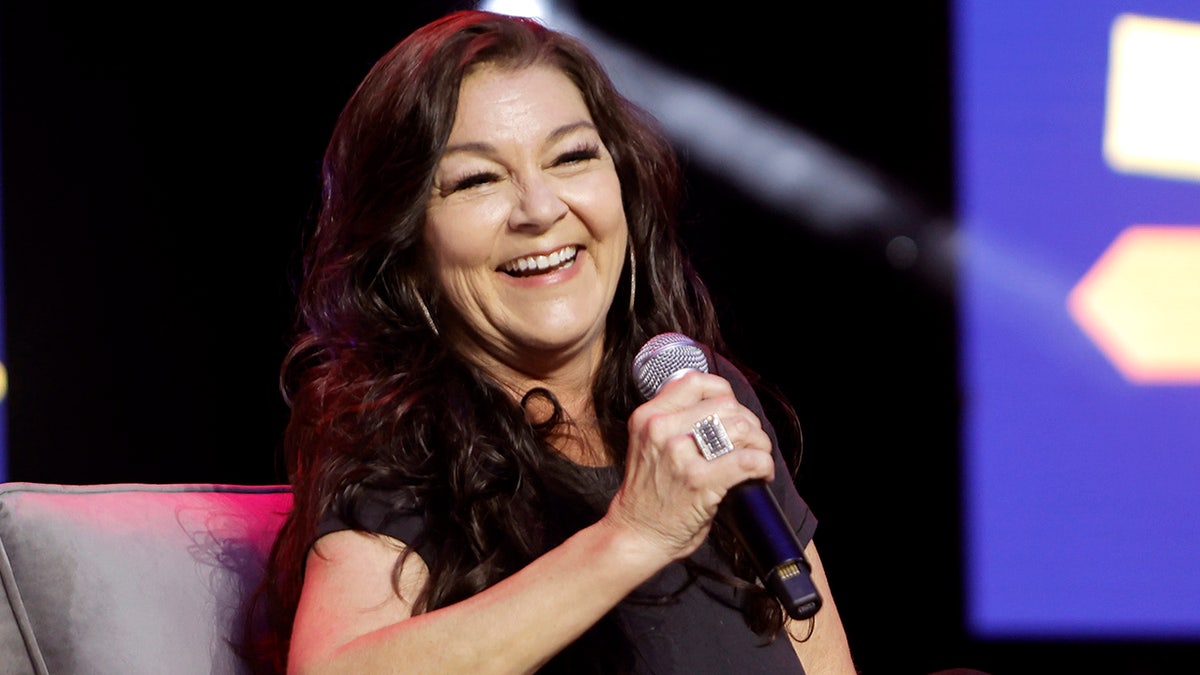
“Silence is Complicity”: Gretchen Wilson Risks Her Entire Legacy in a Raw 3 A.M. Stand Against Political Intimidation and Industry Shadows -du

The Catalyst: 1:44 A.M.
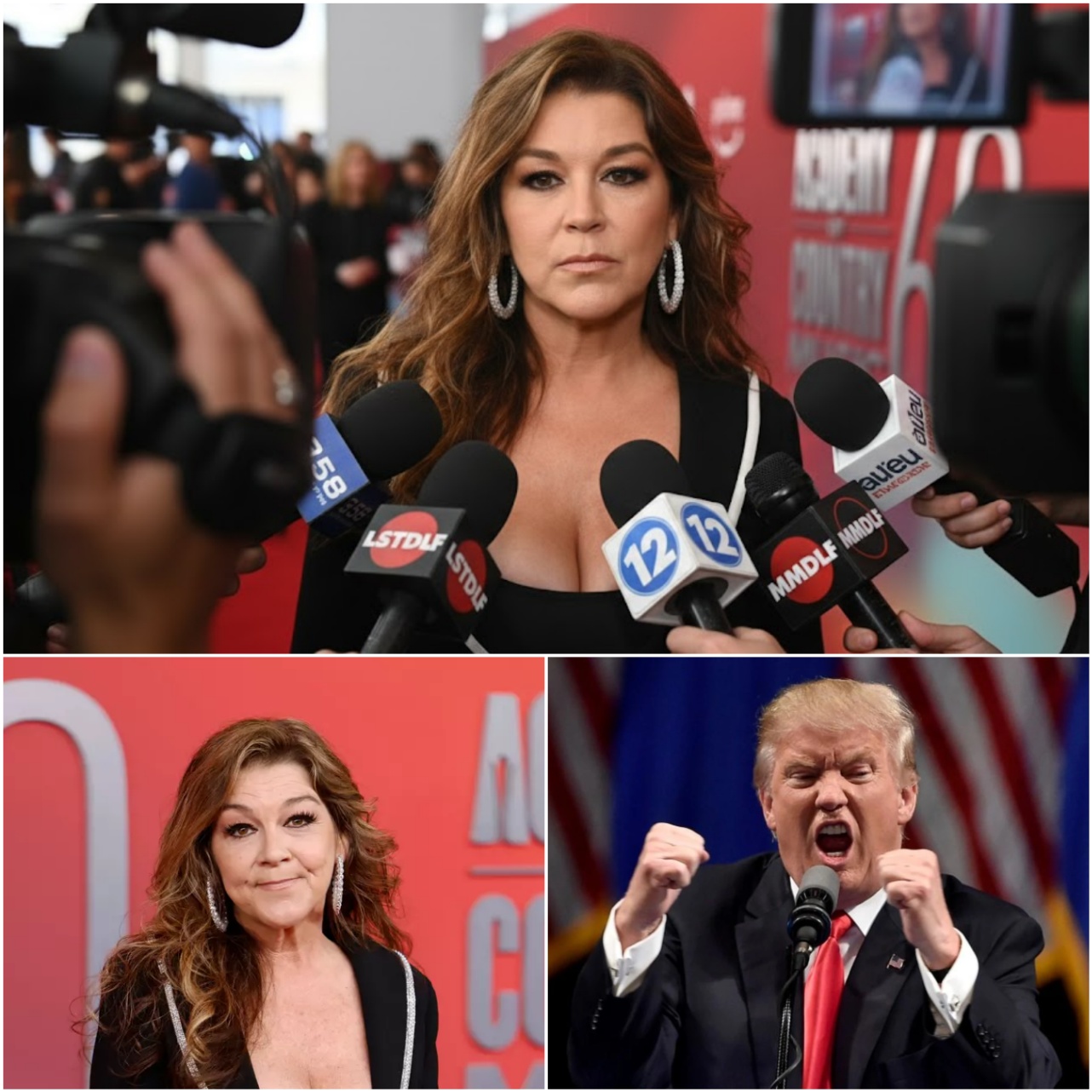
The tension in the virtual room, which quickly swelled to tens of thousands of viewers, was palpable. Wilson didn’t offer a greeting. Instead, she held up her smartphone. “Tonight at 1:44 a.m., I received a message,” she stated, her voice devoid of its usual country twang, replaced by a crystalline, chilling calm.
Decoding the Threat
To the casual observer, it might sound like a stern warning. To an artist whose livelihood depends on radio play, touring contracts, and corporate sponsorships, it was a death knell. Wilson spent the next twenty minutes deconstructing the anatomy of “industry shielding.” She spoke of the invisible threads that connect political donors to media conglomerates. In the world of high-stakes entertainment, “staying in your lane” isn’t just advice; it’s a survival requirement. She detailed how the political machine operates not through public arrests, but through private erasures—the sudden cancellation of festival slots, the mysterious “glitches” in streaming algorithms, and the cold shoulders from executives who once called her family.
The Ghost of Accountability
“I’ve been told honesty costs careers,” Wilson noted, looking directly into the lens with an intensity that made the screen feel small. “That reflection is tolerated—until it isn’t.” She addressed the specific figure behind the shadow, Donald Trump, and the culture of loyalty he demands. Wilson argued that the current political climate has turned art into a battlefield where neutrality is no longer an option. She spoke about accountability not as a buzzword, but as a heavy, exhausting responsibility. For Wilson, the threat she received wasn’t just about her; it was an indictment of a system where a single text message from a powerful man can attempt to bankrupt a woman’s soul and legacy.
A Life Unfiltered
As she spoke, her phone, lying face-down on the desk, vibrated incessantly. The buzz was audible, a rhythmic intrusion that served as a real-time reminder of the pressure being applied. She refused to check it. This act of defiance was symbolic. By going live without a script, a publicist, or a legal team, Wilson was stripping away the protective layers that usually surround a celebrity. She acknowledged that she was likely burning bridges that could never be rebuilt. “They want us to be ornaments,” she said, her voice finally cracking with a hint of the fire she’s known for. “They want us to sing the songs that make people feel safe, while the world outside is anything but.”

The Silence of Complicity
The middle of the broadcast pivoted to a broader philosophical plea. Wilson challenged her peers in Nashville and beyond to recognize that silence in the face of intimidation is a form of complicity. She described the “polite fear” that haunts the hallways of power—the way people lower their voices when talking about the “Big Man” or the “Movement.” She argued that if an artist’s platform isn’t used to protect the truth, then the platform is worthless. The weight of her words felt heavy, especially as she hinted that this wasn’t the first warning she had received, but it would certainly be the last one she kept secret.
The Empty Chair and the Aftermath
The broadcast concluded not with a “thank you” or a song, but with a chilling ultimatum. “If anything happens to my work, my songs, or my voice going forward,” she said, “you’ll know where the pressure came from.” She stood up, straightened her shirt, and delivered her final line: “See you tomorrow. Or don’t. That part isn’t up to me.” She walked out of the frame, leaving the camera running. For nearly ten minutes, viewers watched an empty chair and a vibrating phone. It was a haunting tableau of a woman who had offloaded her burden onto the public. The live feed finally cut to black, but the echoes of her defiance had already begun to ripple through the digital world, leaving a trail of questions that no press release could ever answer.