The Folder That Broke the Beltway: Judge Jeanine’s Tactical Masterstroke
The atmosphere in the room was thick with a tension that usually precedes a storm, but no one expected the eerie, calculated calm that Judge Jeanine Pirro brought to the televised forum.
For years, the halls of power in Washington D. C.
have been defined by a specific type of theater—one where voices are raised, insults are traded like currency, and the truth is often buried under layers of polished rhetoric.
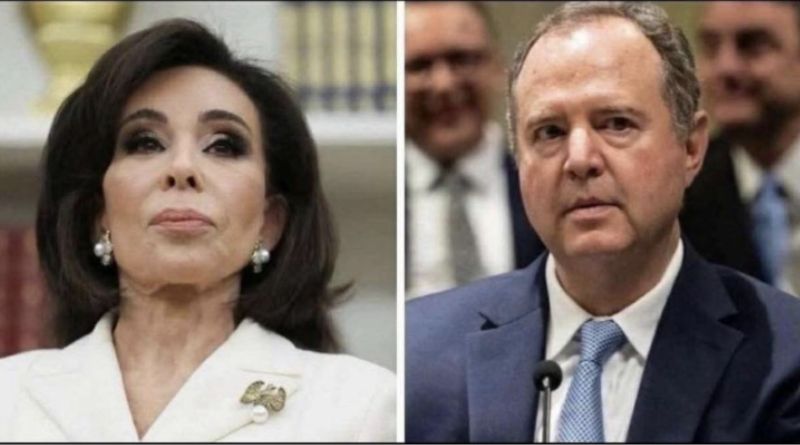
However, when Adam Schiff stepped onto the stage, expecting the usual fire-breathing persona of a cable news veteran, he was met with something far more unsettling.
Pirro didn’t arrive with a prepared speech or a teleprompter full of talking points; she arrived with a single, slender folder that seemed to hold the weight of the entire Capitol Hill establishment within its cardstock walls.
The studio, usually buzzing with the frantic energy of producers and technicians, fell into a vacuum of silence as she sat down, her composure radiating a terrifying level of focus.
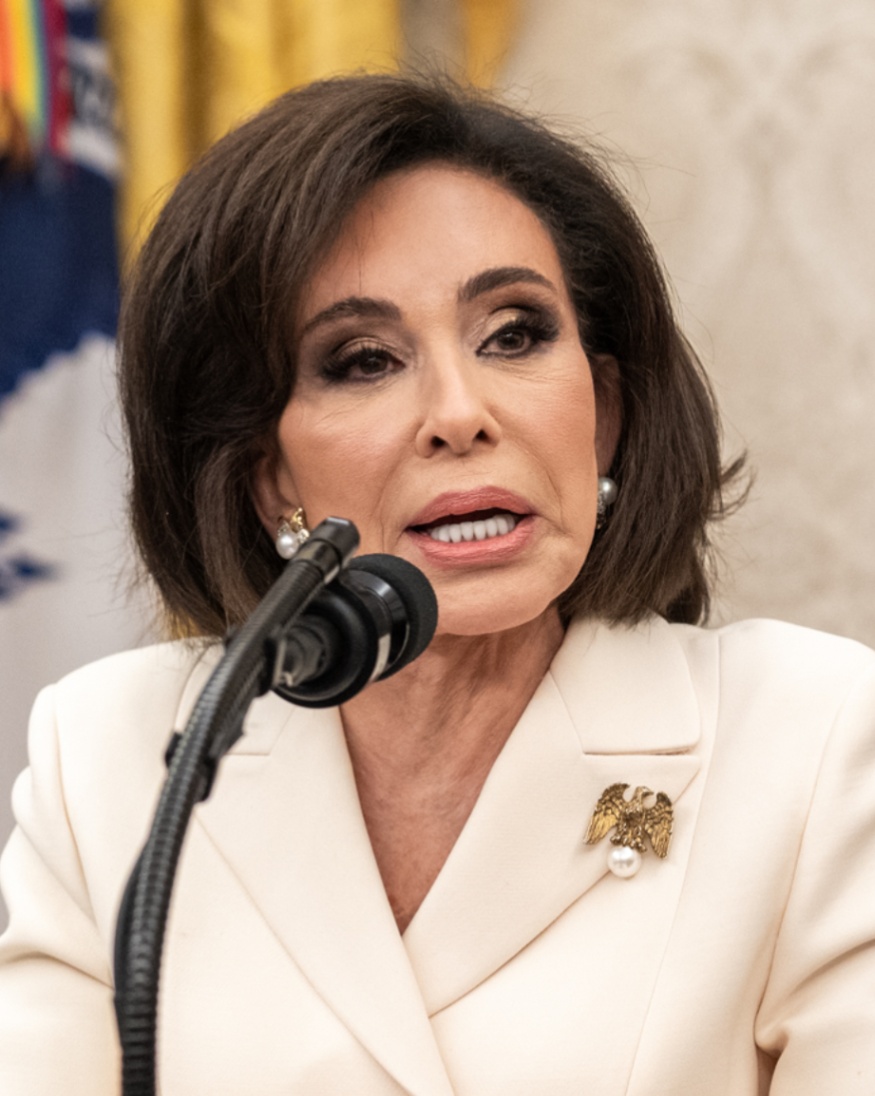
For years, the political establishment on Capitol Hill has operated under the assumption that volume equals victory, yet Adam Schiff soon discovered that silence can be a far more potent weapon than a megaphone.
The Congressman, known for his ability to navigate the complexities of committee hearings and media cycles, appeared ready for a brawl.
He had already labeled her “dangerous” and called for her to be silenced, likely expecting a defensive rebuttal or a series of frantic social media posts.
Instead, he found himself staring into the eyes of a former prosecutor who understood that the strongest evidence doesn’t need to be shouted.
When Pirro whispered, “I’m not here to debate you, Adam,” she wasn’t just making a statement; she was setting a trap.
It was the moment the hunter realized the terrain had shifted beneath his feet, and the rules of engagement had been rewritten in a language he didn’t yet understand.

The moment Pirro produced that single, unassuming folder, the dynamic of the room shifted from a political sparring match to a forensic examination of the truth.
Inside were not her opinions, nor the curated snippets of a campaign staffer, but the raw, unadorned transcripts of the establishment’s own words.
This was the turning point that left the D. C. elite reeling.
By choosing to read his own statements back to him—word for word, without editing or embellishment—she stripped away the armor of political spin.
There is no defense against your own past self, especially when those words are delivered with the clinical precision of a judge.
As she turned the pages, the “Priceless” look on Schiff’s face wasn’t just one of surprise; it was the look of a man watching his own narrative disintegrate in real-time under the weight of its own contradictions.
There is a particular kind of irony in watching a seasoned politician turn the tables, only to find that the “Hunter” has effectively become the “Prey” in the eyes of the viewing public.
As Pirro reached the third page of the transcripts, the power dynamic in the room flipped entirely.
Schiff, who had entered the forum as the voice of authority calling for censorship, was suddenly reduced to a spectator in his own dismantling.
The “dangerous” label he had tried to pin on Pirro began to look more like a badge of honor—a sign that she was dangerous only to those who fear the transparency of their own records.
This wasn’t a debate about policy or ideology; it was a confrontation between the curated image of a public official and the documented reality of his actions.
The silence in the studio wasn’t just respect for the speaker; it was the collective realization that a long-standing political bluff had finally been called.
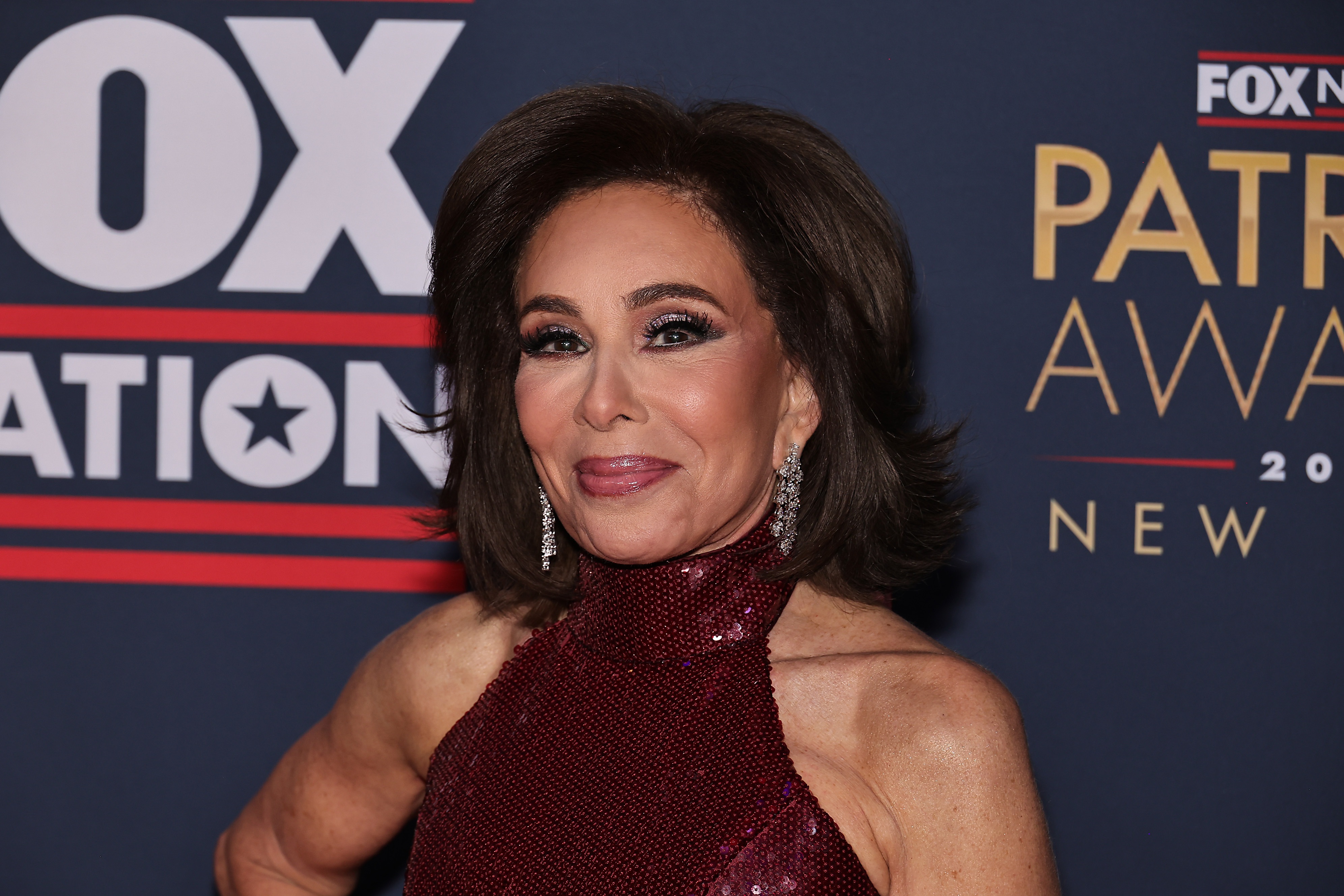
Beyond the immediate spectacle of the confrontation lies a deeper resonance with a segment of the American public that feels increasingly alienated by the rhetoric of their elected officials.
To the “forgotten millions” Pirro claims to represent, this wasn’t just a win for a television personality; it was a symbolic victory for anyone who has ever felt gaslit by the political machine.
The establishment often views people like Pirro as “dangerous” because they refuse to follow the unwritten rules of the D.
C. social contract—the one that says you don’t use a person’s actual words to hold them accountable in public.
By breaking that rule, Pirro didn’t just win a debate; she validated the frustrations of a demographic that believes the truth has been hidden behind a veil of partisan interests for far too long.
By choosing to read unedited transcripts rather than engage in the usual partisan mudslinging, Pirro bypassed the filters of mainstream media and spoke directly to the facts of the matter.
This tactical choice was brilliant in its simplicity.
You can argue with an opinion, you can refute a claim, but you cannot easily escape the reality of your own recorded speech.
The “terrifying composure” noted by onlookers was the result of a woman who knew she didn’t have to work hard to prove her point—the evidence was doing the work for her.
In an era of deepfakes and misinformation, the act of simply reading a transcript became a revolutionary act of clarity that left the establishment with no room to maneuver and no script to follow.
The aftermath of this encounter has left the D. C.
establishment reeling, not because of a new scandal, but because of the terrifying power of one’s own words being used as a mirror.
This event serves as a stark reminder that the greatest threat to a carefully constructed political persona is the unedited truth.
As news of the confrontation spread, the conversation shifted from the “danger” of Pirro’s rhetoric to the vulnerability of the establishment’s narrative.
The look on Schiff’s face became a meme for the ages, but the substance of the folder remained the true story—a collection of promises made and retracted, of statements that didn’t age well, and of a political class that has grown unaccustomed to being looked directly in the eye by the people they serve.
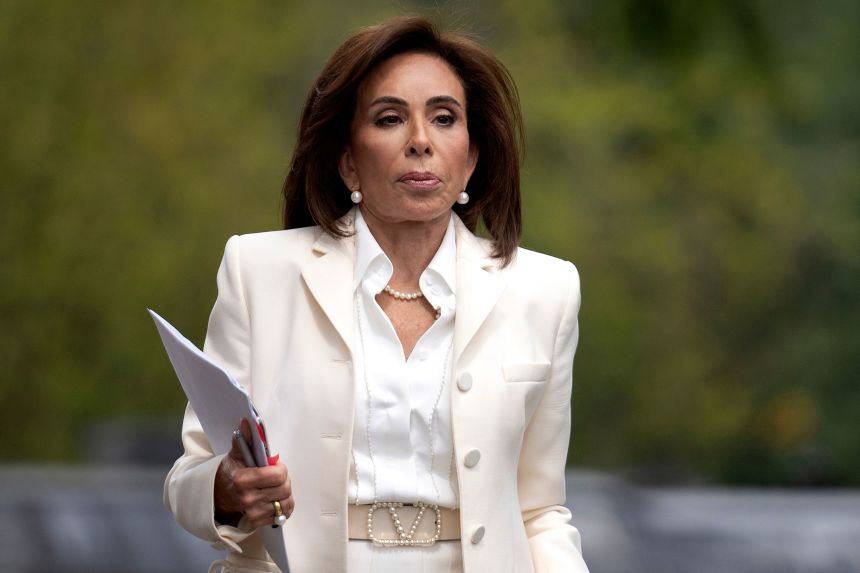
Ultimately, whether one views Jeanine Pirro as a firebrand or a truth-teller, her refusal to retreat from the Capitol Hill establishment marks a pivotal moment in the current political landscape.
She didn’t just survive the attempt to silence her; she thrived by leaning into the very transparency that her critics feared.
The “one sentence” that has the establishment shaking isn’t a complex legal theory or a grand accusation, but a simple reflection of the current state of power.
In the final paragraph of this unfolding drama, the message is clear: the most dangerous person in the room is not the one who screams the loudest, but the one who has the receipts and the courage to read them aloud.
Power is not found in the ability to silence others, but in the refusal to be silenced by those who fear the echoes of their own voice.